
HDPE Membrane Waterproofing
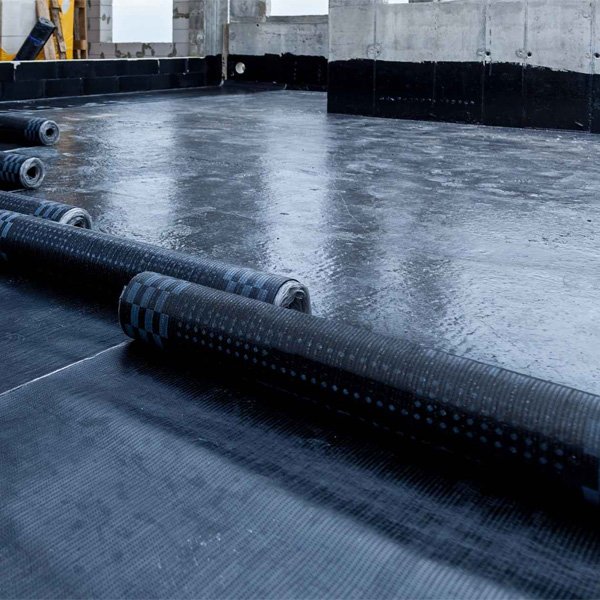
HDPE (High-Density Polyethylene) Membrane Waterproofing is a robust and long-lasting waterproofing solution designed to protect structures from water ingress, chemicals, and soil moisture. Manufactured from high-density polyethylene, this membrane offers excellent tensile strength, puncture resistance, and durability.
HDPE membranes are commonly installed as pre-applied or post-applied systems, forming an impermeable barrier that prevents water seepage and protects concrete structures, especially in below-ground and garden areas.
HDPE Membrane Waterproofing
Pre-Applied HDPE Membrane System
This method is used before concrete casting. The HDPE membrane is laid on prepared surfaces such as PCC or shuttering, with overlaps properly sealed. Concrete is then poured over the membrane, allowing it to bond integrally with the structure. This system is highly effective for basements, raft foundations, and lift pits.
Post-Applied HDPE Membrane System
In this method, the HDPE membrane is installed on already constructed concrete surfaces. The sheets are fixed using mechanical fasteners or compatible adhesives, followed by sealing of joints. It is commonly used for retaining walls, foundations, and existing structures.
Heat Welding / Hot Air Welding
HDPE membrane joints are sealed using hot air welding machines to create a continuous, watertight seam. This ensures strong joint integrity and long-term waterproofing performance, especially in below-ground applications.
Overlap & Taping Method
Sheets are overlapped as per manufacturer guidelines and sealed using specialized waterproof tapes or sealants. This method is typically used for lighter applications or as a supplementary sealing technique.