
Garden Waterproofing
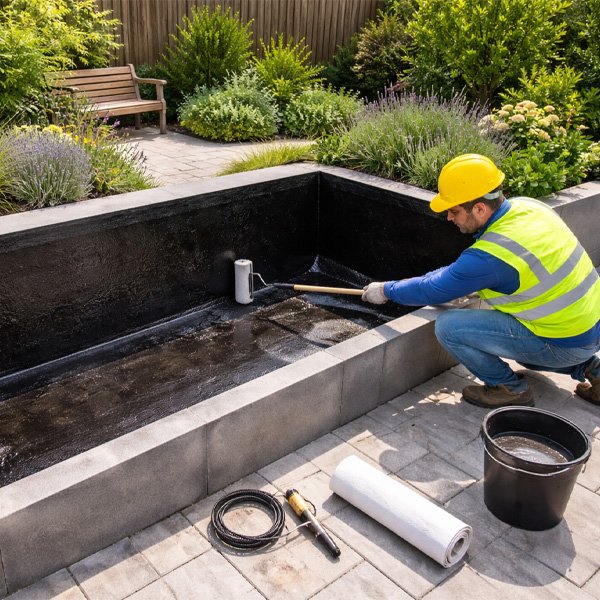
Garden waterproofing is a specialized treatment designed to protect landscaped areas, planter boxes, green roofs, and garden structures from water seepage and moisture-related damage. Since gardens are continuously exposed to irrigation water, rainwater, and soil moisture, improper waterproofing can lead to leakage into basements, retaining walls, and building foundations.
A well-executed garden waterproofing system uses high-quality membranes, protective coatings, and effective drainage layers to prevent water penetration while allowing healthy plant growth. This ensures long-term structural safety without compromising the aesthetics or functionality of the garden area.
Garden Waterproofing
Membrane Waterproofing
Uses bituminous, HDPE, or PVC membranes laid beneath the soil layer to create a strong barrier against water penetration. Commonly applied in gardens above basements and podium slabs.
Root Barrier Waterproofing
A specialized layer added to prevent plant roots from penetrating and damaging the waterproofing membrane, essential for landscaped terraces and green roofs.
Cementitious Waterproofing
A cement-based coating applied on concrete surfaces in garden areas. It provides good water resistance and is suitable for planters, retaining walls, and small garden structures.
Polyurethane (PU) Waterproofing
A highly elastic and durable waterproofing system that accommodates structural movement. Best for terrace gardens and landscaped podiums exposed to heavy water load.